










1LE/ACY
Fortified city of Acaya (LE)
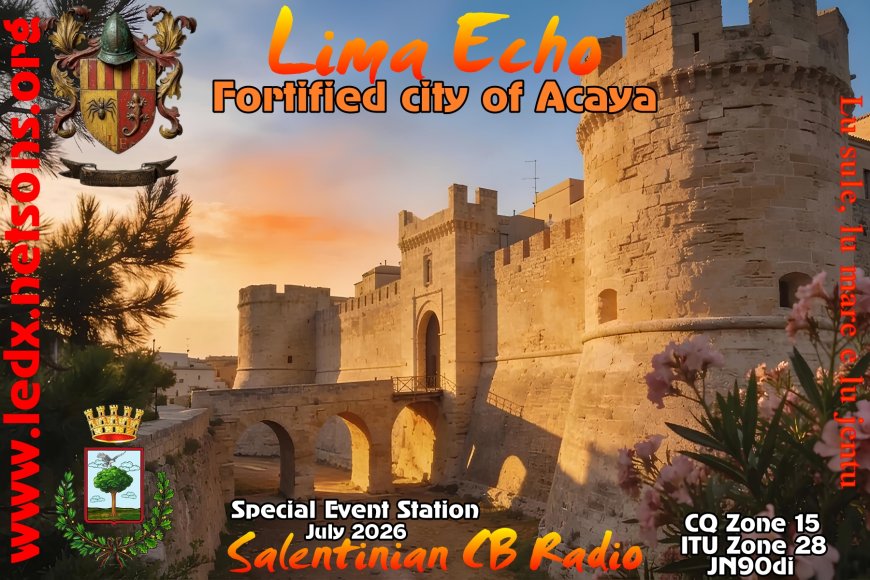
Here, time seems to have stood still in the 16th century, within the magnificent urban setting that military architect Gian Giacomo dell'Acaya created for the ancient fiefdom of Segine. Once an inhospitable and barren territory, granted in 1294 by Emperor Charles II of Anjou to the Spanish noble family De Laya (later known as Dell'Acaya), it became, during the Renaissance, a place where the concept of the "ideal city" flourished. This concept envisioned a space designed for harmonious living and social interaction—a human-centric environment tailored to people's needs and capable of fostering a civilized society.
It is a unique fortress-city, designed to withstand the brutal Turkish invasions of the 16th century and serving as the final, indispensable defensive bulwark protecting Lecce.
It was Alfonso dell'Acaya, the seventh Baron of Segine, who initiated the construction of this imposing defensive complex in the late 15th century, erecting the two circular towers at the castle's northeast and southwest corners. Gian Giacomo, who succeeded his father as the fiefdom's eighth baron in 1521, soon realized that these isolated towers would not offer long-term protection for the land and its people—especially given the concurrent rise of firearms. Consequently, Segine underwent a military transformation: the town was built within high, square-plan ramparts, with the castle itself serving as the bastion at the southwest corner. The pentagonal, lance-shaped bastions with recessed flanks and the presence of "treacherous embrasures"—hidden, invisible openings in the recessed flanks through which cannon barrels protruded—combined with a dual-level masonry system (featuring a sloping lower section), a patrol walkway running the entire perimeter, and a deep moat fully encircling the village, quickly rendered this fortress-city impregnable.
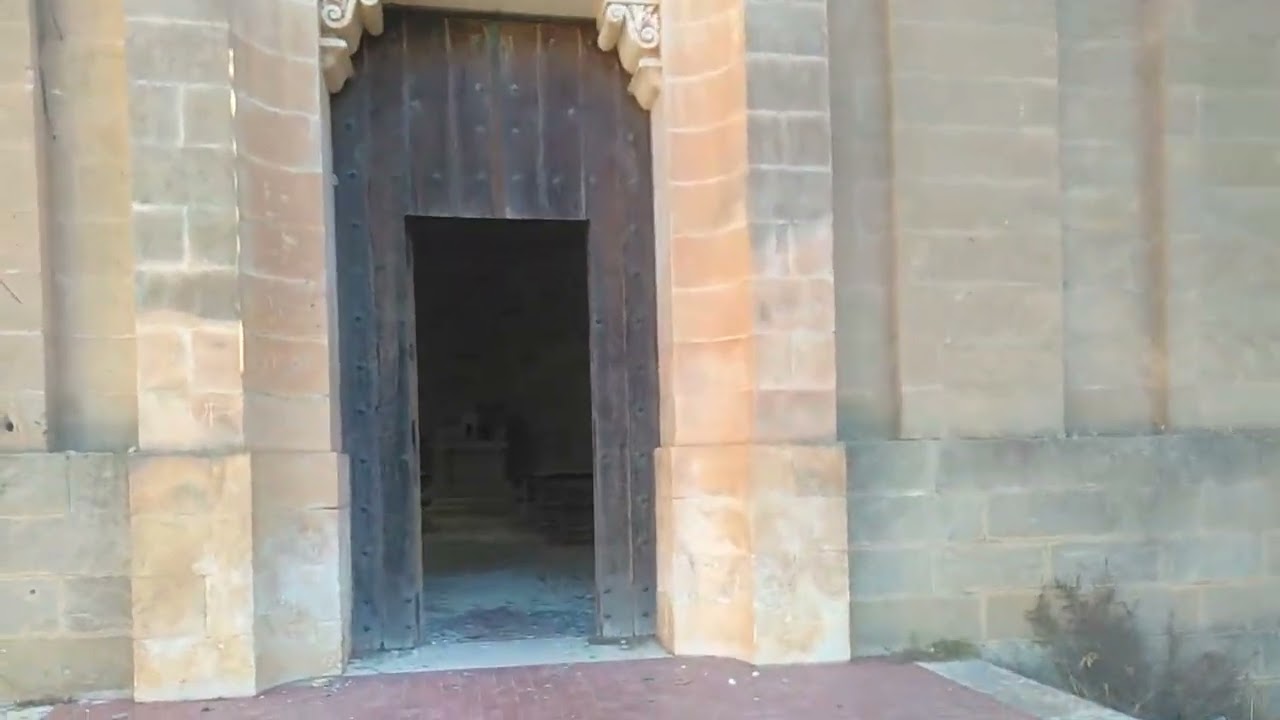
However, the concept of the "ideal city" required military life to be fully integrated with civilian life; it was precisely upon these principles that Gian Giacomo transformed Acaya into an extraordinary settlement. It featured an urban layout organized around a regular grid of orthogonal streets, intersected diagonally by three squares: Piazza d'Armi (facing the Castle's only entrance); Piazza Gian Giacomo (in the center of the village, home to the Church of Madonna della Neve, built in the early 16th century and fully restored in 1865); and Piazza Convento (in the northeast corner, site of the Convent of Santa Maria degli Angeli, which he himself commissioned). The village retains this original layout to this day. The sole entrance to the settlement was the *Porta Monumentale* (Monumental Gate), built by Gian Giacomo in 1535 and restored in 1792 by the Vernazza family, Acaya's final feudal lords.
Yet Acaya’s significance extends beyond its Renaissance history. Outside the walls stands the Chapel of San Paolo, dating back to the mid-18th century; it was the oldest pilgrimage site (along with Galatina) for victims of tarantula bites. According to popular belief, tarantism—triggered by the bite of the tarantula (*Lycosa tarentula*)—induced a state of general malaise (characterized by catalepsy, sweating, and palpitations) in which music, dance, and color were the fundamental elements of a therapy based on musical exorcism. Once the afflicted woman—the *tarantata*—had received the grace of Saint Paul, she was taken to the Saint's chapel to drink the sacred water from the adjacent well.
Acaya is a piece of history that has come down to us intact—a testament to the splendor of bygone days, and a place defined by stories, people, and architecture that not even time has managed to conquer.
On Air 27/06/2026 (all morning)
Final Log
1LE76 Gigi
21AT106 Ljubisa
1LE01 Franco
13WM019 Wim
1LE115 Emanuele
161TW444 Sebastian
161HWB32 Pawel
14VD163 Denis
14LE1191 Manuel
14LE928 Bruno
30LS001 Carlos
161WGC231 Darek
14SD120 Sebastien
44WM001 Andre
30AO010 Oscar
What's Your Reaction?
 Like
4
Like
4
 Dislike
0
Dislike
0
 Love
6
Love
6
 Funny
0
Funny
0
 Angry
0
Angry
0
 Sad
0
Sad
0
 Wow
3
Wow
3